

Last week, I shared my Fiber Optics thesis with you --- the
investment thesis that has delivered the strongest return of any we have
covered this year.
If you haven’t read it yet:
The $73 Billion Fiber Optics Thesis

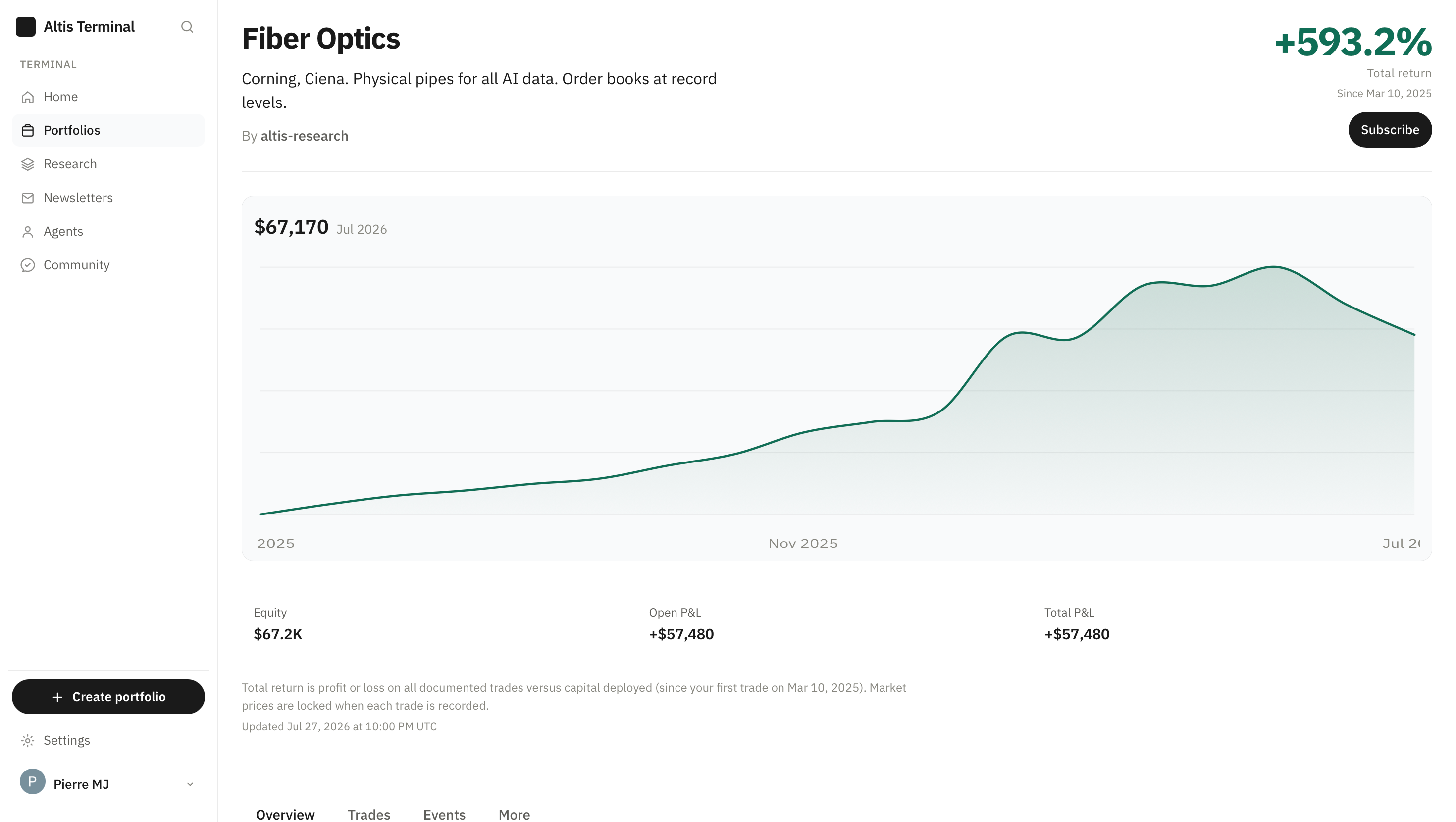
One of the best-performing investment theses we have developed this year has been Optical Fibre, generating a total return of more than 593% (as of 28 July).
Today, I want to explain why I don’t think this thesis is over.
The past 18 months were only the first chapter.
At its peak, the portfolio returned nearly 700%. As of July 28, it was up +593% since inception.
I believe we’re now entering the second chapter.
Here’s why.
Every new generation of AI models requires more computing power.
For the past two years, semiconductors have been viewed as the number
one investment opportunity created by AI. That’s why companies supplying
AI chips have seen their valuations surge.
But there’s another problem developing beneath the surface.
All of these chips need to communicate with one another.
In the early days, training a frontier AI model required a few hundred
GPUs.
Today, the largest AI clusters contain tens of thousands.
Tomorrow, they’ll contain hundreds of thousands.
Every GPU constantly exchanges data with every other GPU in the cluster.
At a certain scale, the challenge is no longer simply producing more
computing power.
The challenge becomes moving data fast enough between all of those
machines.
I believe this is one of the most important shifts taking place across
AI infrastructure today.
It’s exactly why I built the Fiber Optics portfolio more than a year
ago.
This wasn’t just a theory.
It became one of the best-performing portfolios I’ve documented over the
past year.
If you’re a Macro Notes Premium member, you’ve probably followed the
buys, trims and portfolio updates as the thesis evolved.
Back then, almost all of the market’s attention was focused on Nvidia.
Yet the opportunity in optical networking was surprisingly easy to
anticipate if you spent enough time studying how AI infrastructure
actually works.
Many readers spotted the opportunity early.
Some even shared insights that helped me better understand the industry
and refine the portfolio.
The thesis was simple.
AI wasn’t only going to create explosive demand for computing power.
It was also going to create explosive demand for the infrastructure
required to move all of that computing power efficiently:
Optical fiber
Optical networking equipment
High-speed switches
Networking components
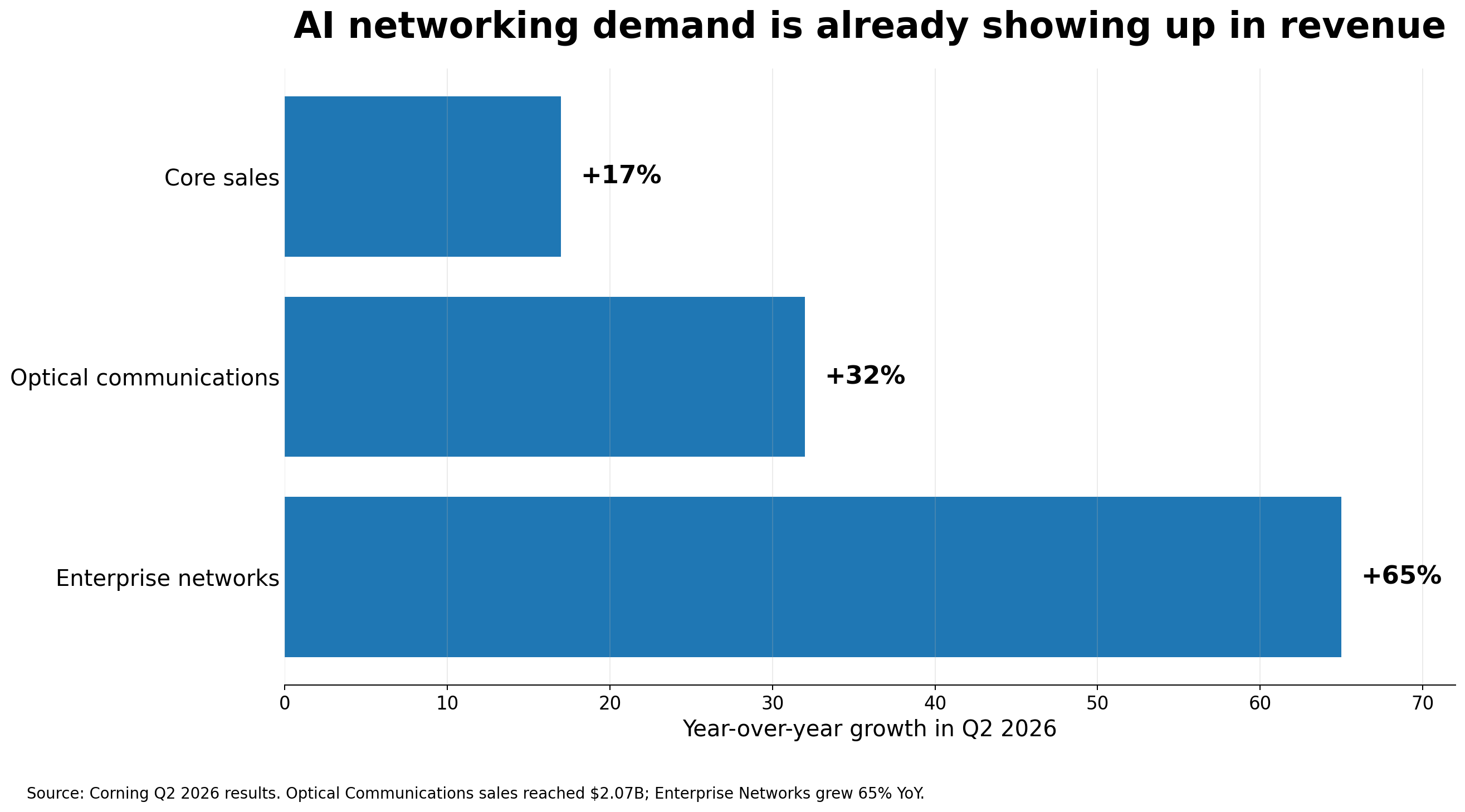
This demand is no longer theoretical. It is now becoming visible directly in company results.
Put simply:
Without networks, even the world’s most powerful GPUs become
bottlenecks.
Until now, I’ve documented these portfolios directly inside the
newsletter.
Starting August 14, you’ll be able to follow them inside Altis
Terminal.
Altis Terminal brings together more than one hundred investment
portfolios covering some of the most promising long-term investment
theses across different sectors and investment styles.
At launch, you’ll be able to follow portfolios from five independent
Substack publishers. Over time, we’ll invite more researchers and
newsletter authors to publish their ideas and documented track records
on the platform.
Access to Altis Terminal is included at no additional cost with a
Macro Notes Premium subscription.
Subscribers who join today will receive access as soon as the platform
opens on August 14.
But back to the thesis.
I believe the Fiber Optics thesis is now entering its second
chapter, and I think it could prove even more interesting than the
first.
Here’s how I would summarize it.
AI clusters are becoming dramatically larger.
Hyperscalers are talking more about networking than ever before.
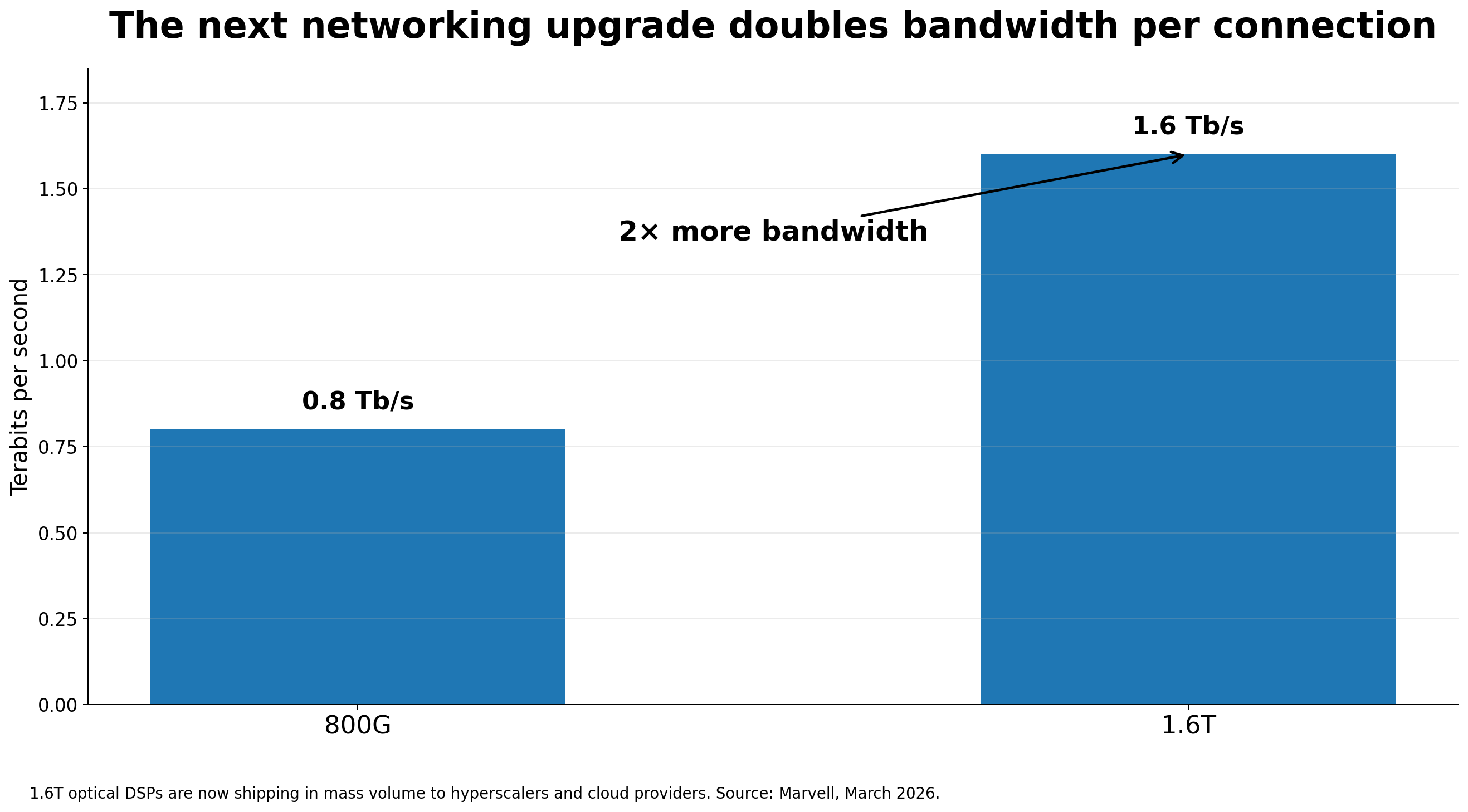
Network speeds are moving from 800G to 1.6T.
Infrastructure spending is no longer focused solely on GPUs.
Increasingly, it’s about everything required to connect those GPUs
together efficiently.
This transition is important because growth is not only coming from the construction of more connections. Each new generation of connections is also becoming faster, more complex and potentially more valuable.
The first question was:
Was this thesis correct?
I think that question is now largely behind us.
The more interesting question today is:
If the market is finally beginning to understand this shift, where
does the next opportunity still exist?
In the Premium edition, I explain:
Why I believe the networking bottleneck is only just beginning.
Which companies remain best positioned today.
Which positions I’ve already trimmed and why.
The next catalysts I’m watching over the coming quarters.
The biggest risks that could invalidate the thesis.
How I’m currently positioned across the Fiber Optics portfolio.
Macro Notes Premium isn’t just access to research.
It also gives you access to the portfolios behind each thesis.
With the launch of Altis Terminal, you’ll be able to follow every
documented trade in real time, understand why each position is added or
reduced, and watch the thesis evolve as new evidence emerges.